Showing posts with label Reading and Storytelling. Show all posts

Tuesday, May 7, 2013

Reading and Singing to Your Unborn Child

I was thrilled to receive an email from a reader asking for book recommendations for the 5-month-old baby in her womb. It brought back memories of how I was also eager to do “everything right” and to do everything I could for my unborn, but already much-loved baby. I thought I would share here a longer version of my reply to Mommy Jill.


Pure Magic

I read to both of my babies while they were still peacefully floating inside me. Reading and singing to my first baby, Little T, was very intentional. I bought books for her (the beginnings of our home library) and diligently read every night before going to sleep. And since my husband would often arrive home very late during that period, I would feel sentimental and sing lullabies too.

One of our maternity photos in 2007 by Dino Lara

Little Sir, on the other hand, was able to listen to all the wonderful books that his sister and I were reading. He got to hear songs and to join our dancing too!

Some would scoff at such enthusiasm, but there is a growing body of research that says babies respond to sounds from the womb, and that it’s never too early to start communicating with them.

My reason for reading and singing to my unborn babies was that I wanted to connect and bond with them right from the start. More than just to aid their brain development as widely written about, I wanted them to know my voice and know me the moment we met.

And so it was pure magic when Little T was crying inconsolably during our first hour together and I just heard myself singing hush, little baby, don’t say a word, mama’s gonna buy you a mockingbird, my “pregnancy song." She stopped crying, looked up at me as if she recognized me, and went peacefully to sleep. I was thunderstruck, awestruck, lovestruck.


What to Read and Sing

I only remember two books that I read to Little T then. Sam McBratney’s “Guess How Much I Love You” and a collection of poems, “Who’s That Baby?: New Baby Songs” by Sharon Creech. Both books celebrate babies and the love that parents have for them. In the few times that I intentionally read to Little Sir in my tummy – please forgive me as I figured I was already reading to him together with his big sister! – I remember choosing “Brown Bear, Brown Bear, What Do You See?” by Eric Carle.


I suppose the guidelines for choosing what to read and sing to the unborn baby are the same ones that we use for very young children: simple, rhythmic, and repetitive.

If you plan to read to the little one in your womb, or are looking for a gift for an expectant mom, you can’t go wrong with some of the same titles that I recommend for those with newborn babes: 
  • Eric Carle’s rhythmic books such as the aforementioned “Brown Bear, Brown Bear”
  • Margaret Wise Brown’s classic “Goodnight Moon”
  • Deborah Guarino’s “Is Your Mama a Llama?”
  • Sam McBratney’s “Guess How Much I Love You”
  • Vera B. William’s Calecott Winner “More More More Said The Baby”
  • P.D. Eastman’s “Are You My Mother?” 

Lastly, brush up on your nursery rhymes in preparation for your child’s birth and get a collection of Mother Goose Rhymes, which you and your baby will love until toddlerhood. 


Make magic!


Wednesday, January 30, 2013

Owl Moon: An Exercise in Choosing Go-Along Books

Last week, we thoroughly enjoyed "Owl Moon." Written by award-winning author Jane Yolen in poetic form, it is a story about a father and his daughter who go searching for owls (or owling) one cold night.


As promised last Monday, I'll be sharing how we choose and use go-along books to enrich our reading experience. By using "Owl Moon" as an example, I share here three general guidelines that I use in choosing books to read together.


A GOOD MIX OF FICTION AND NON-FICTION

The girl, who is the narrator of the story, goes owling with her father for the first time. The moon lights their way.

Just by the book's title itself, there are already two interesting topics: owls and the moon. Both are part of the natural world that can be discussed scientifically, or at least factually.

I Wonder Why Vultures Are Bald


So, to give us some facts about birds and owls, we read "Vultures Are Bald and Other Questions About Birds" from the I Wonder Why series, "Small Animal Encyclopedia", and "Awesome Animals: Beastly Birds and Bats."  Fact books can be easily and cheaply had at any second-hand bookstore! (Should we carry these too in our shop? Hmmm.)


Looking Through a Telescope


To know more about the moon, we read "Rookie Read-About Science: Looking Through a Telescope" that inspired us to look through our own Plan Toys toy telescope. We're still waiting for the children's grandfather to find his Time magazine-issued telescope! Oh and we also read a few pages from my husband's old Science Library book about the moon.


For fun, we read more picture books! This really cool activity book, "Whoo's There? A Bedtime Shadow Book" by Heather Zschock, made us feel like there was really an owl flying over us! Whoo! Whoo!


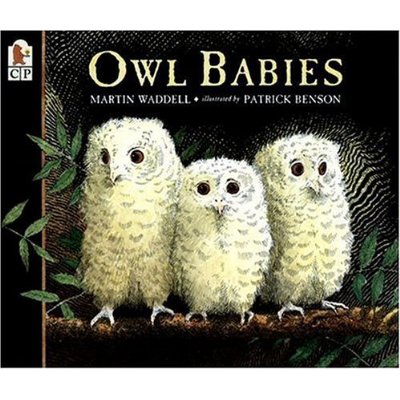
We also read "Owl Babies" by Martin Waddell and extracted some facts about owls from the story of the scared little owls, like what they eat and when and where they sleep.


SIMILAR LITERARY FORM

"Owl Moon" as described by its author Jane Yolen, is a "gentle tone poem."

My daughter at first refused to read the book because "I don't like poems!" at that particular time. So, to appreciate poetry again, we read some more similarly written books.


Margaret Wise Brown, author of beloved "Good Night Moon," was a prolific writer who wrote hundreds of books. "Wait Till The Moon Is Full" was a perfect book to read along with "Owl Moon" as it is about a little raccoon who wants to go out at night to meet night time creatures, but is made to wait by his mother for the full moon. It contains poetic verses that the mother raccoon sings to her child.

This inspired me to sing "Owl Moon" and made Little T sit up and ask for it again and again!


The first time we read "Hiawatha" by Henry Wadsworth Longfellow, we didn't know how to feel about it. It's a looong poem. But by reading it as a go-along with other books, we learned to appreciate it over time. Reading it with "Owl Moon" made us connect with it more because both books are poems, and both are, essentially, about nature.


DEEPER LOOK AT A THEME

The girl in "Owl Moon" exhibits her self-control as she silently walks through the woods with her father  - "because if you go owling, you have to be quiet." She displays why she was finally allowed to go with her father on her first owling experience.


We have actually been working on self-control for several weeks now. To go-along "Owl Moon" though, I researched on books about self-control in the Internet and came across Kevin Henkes "Lilly's Purple Plastic Purse." Borrowing Sanne's copy, we had a great time reading and talking about Lilly and how she learned to master her feelings and actions to respect her classmates and teacher. A must-read, I am getting our own copy of this book to keep!


I hope the above example has given you enough ideas to start planning go-along books with your child. It's easy and your child will soon get the hang of it and will start suggesting books to include in your list too!


Make magic!


Sunday, January 27, 2013

The Power of "Go-Along" Books


Picture books, as I have personally proven in more than two years of using Before- and Five in a Row, are a great jumping point for all kinds of learning.

Just by reading and focusing on one book once a week, our family has discovered so much about the world around us! Our curiosity is being stimulated, and our love of learning is constantly being nurtured. Did you notice that I said "our?" 

But this curiosity and love of learning do not happen just because of that one book. I learned the value of good "go-along" books early on in our homeschooling and make sure to include several in our weekly literature-based activities.

What are “go-along” books? 

I was puzzled the first time I heard the term “go-along books.” I soon found out that these are books that are related to each other by theme, topic, location, character, or other story elements, and are therefore read together. It’s a wonderful idea that makes reading interesting and enriching! A loose tooth can make us read  Audrey Wood's Tooth Fairy that will then remind us of Doctor De Soto, and then will inspire us to look for a fable about cunning foxes.

www.thelearningbasket.com


Here are some good reasons for you to choose and read books that "go along" with each other, even if you are not homeschooling: 

  • To provide additional and factual information about a topic 
  • To explore an example of an idea found in another book 
  • To look at an idea from a different perspective 
  • To provide children with the opportunity to make connections between and draw conclusions from different materials 
  • To teach that information has different sources, and you only have to look for it in a book or other media 

Connecting ideas between various sources is a skill that children must master. Choosing the right books that will provide them opportunities to think and relate ideas is easy to do, and so rewarding in the long run. Being intentional about the books that we read will inspire learning in your child - and definitely in you too!

I will leave you with a quote that has been attributed to William Butler Yeats. Though I am unsure of its provenance (as I have never read the original source myself), it does speak the truth.

www.pinterest.com


Watch out for my post on Wednesday as I give an example of how we choose and use our go-along books. 


I know I missed other great reasons for using go-along books. Share with me what you love about them!


Make magic!


Monday, December 10, 2012

Even Small Kids Can Learn Big Words


Natural vocabulary acquisition is one of the wonderful benefits of regularly reading to our children - that is, if we take the time to explain and to demonstrate what a word means!

Little T was just three when she started relishing the word "camouflage." She loves the way it rolls off her tongue, and uses it every chance she gets. One time, she even used it to describe my (newly-done) pink toenails resting on my pink slippers!

So, how did a small child learn to comfortably use such a big word? 

It all started with The Little Rabbit, a book that has lovely photographs of real rabbits instead of the usual picture book illustrations. "Before Five in a Row" suggests that parents talk about how difficult it is to see the wild rabbit in the foliage and to introduce the word camouflage to describe the situation.


I took one step further and made a game out it. Little T and I made some simple blue, green, yellow, and pink origami bunnies and took turns finding ways to camouflage our little pets. I remember playing that game for one whole day, putting the origami bunnies on top of or in front of same-colored objects.

We have since moved on to other books and activities, but somehow, the word camouflage has been ingrained in my daughter's memory and has become part of her daily vocabulary.

Little kids can learn big words, when we read to them regularly, when we patiently answer their questions, and when we take the time to make the words hop out of the pages.


Make magic!


Friday, October 5, 2012

Reading To Toddlers

I received a lovely email this week from one of our bookshop customers, Mommy Audrey, and I asked her permission to reprint our exchange with the hope that other parents would benefit from it. I was able to identify with her concerns because Little Sir is about to turn two in a couple of months!

My son is 2 years old and, as many times as I've tried to read stories to him, he can rarely sit through an entire book. Can you offer any tips on how to get him to become more interested? Or is it really a matter of preference for them? Or do they start enjoying stories in their own time and at their own pace?

I've read that if you start reading to a child at an early age, they are more inclined to love reading as they grow up. I've been reading to my son since he was a few days old. I started with narrating and pointing out objects in picture books, then paraphrasing short stories into simple words that I felt he would understand, then now to reading each and every word whether or not he appears to be listening! When he was a baby, he preferred eating the books to reading them, which I read is normal and should be allowed. I tried letting him chew on one book while reading another to him, which worked sometimes. But once he started walking, I found myself reading to empty air or to a toddler who insisted on flipping pages before I could get 2 words in! It sometimes get frustrating since I really want to bond with him over books!

There are some books that he really enjoys, though. He LOVES (bordering on obsession!) the alphabet and is usually seen toting an ABC book while naming all the objects that start with each letter. Generally he likes books with objects/animals that he can identify in one word. I've noticed that he also loves picture books with sequences that can be sung -- Farmer in the Dell, Old Lady Who Swallowed a Fly, This is the House that Jack Built, Old MacDonald, etc. Those books he can read over and over. But how do I get him to like story books??? :S Any suggestions? Or can you recommend a book that's sort of along that theme but has more of a "story"? 


Doesn’t it sound like Mommy Audrey and her son are doing great already? I told her so, as I really loved her email for several things:

1. She started reading to her son at an early age
2. She is an active reader and points out objects
3. She has observed her child enough to know what kind of books he loves to read
4. She supports his interests by giving him the type of books that he likes 
5. Her son LOVES books

Mommy Audrey is concerned though about “reading to empty air” and getting her child to like story books. I offered advice based on the developmental characteristics of the two-year-old. Knowing where a child is developmentally helps in setting one’s expectations. 


The Two Year Old Child

It is perfectly normal for a 2-year -old to have a short attention spanAt this age, he is physically active and is busy exploring his surroundings. You would find him walking or running about just when you’re hoping for some cuddle time! 

It’s also the age when toddlers are trying new words and are building their vocabularyWhen Mommy Audrey points out objects in a picture book, she is helping her son expand his vocabulary, and if the object is familiar, she is also giving him something that he can relate with.

Developmentally, toddlers cannot yet follow the intricate details of a story. One-word or one-sentence pages are best to keep their attention. They love repetitive and predictable phrases which make them feel accomplished and secure since they know what’s going to happen next. It gives them a kick out of filling in the blanks! 

from "Good Night, Gorilla" by Peggy Rathmann


Toddlers, especially boys, like books with action, or storytelling with actions, songs, voices... in short, exaggerated reading! Lastly, young children need to hear a story again and again and again to fully internalize it. 

Based on Mommy Audrey's description, her son is right where he should be in terms of reading - really fantastic! And to answer her request for book suggestions, here are some on the top of my list:

* Five Little Monkeys - perfect for jumping on the bed while reciting!
* Five Little Ducks
* Alphabet books like Dr Seuss' ABC
* Brown Bear, Brown Bear What Do You Hear (and others in the series) - for repetition and animal sounds
* We Have Planes At The Airport - since it's a boy thing
* Good Night Moon
* Good Night, Gorilla - a fantastic wordless picture book!
* Each Peach Pear Plum - a funny book featuring familiar nursery rhyme characters


I am thrilled to meet a kindred spirit in Mommy Audrey. As I advocate parents' active participation in their children's learning, I am extending an invitation to all of you, as I did to her. 

Come join us in Making Reading an Effective and Lasting Habit tomorrow, October 6, from 1 to 3 pm, at the San Juan branch of The Learning Library. We first offered it in July and it is now on its third run. It will help you answer some questions you may have about making readers out of your children.

Kindly email me at mariel at thelearningbasket dot com to reserve your slot.

Make magic!

Wednesday, August 8, 2012

Miniature Storytelling Props


The rain is POURING over Manila, and my heart goes out to those who are affected by the floods. We are on guard ourselves, not knowing if history will repeat itself, when tropical storm Ondoy ravaged homes in our area almost three years ago.

When grownups worry, though, children can’t help but feel the tension and the fear. The mother hen in me comes to the fore and makes me want to just snuggle with my chicks, to protect them just by keeping them close to me.

So we stay in bed, this long dark, rainy day. We read to our hearts’ content as I try to keep my mind off the gushing danger outside. We’re reading with the fireplace blazing by our side. Ffff- fireplace? In Manila? Oh, it’s our miniature fireplace!


I recently wrote about making stories come alive with various storytelling devices, and the use of props was on my list. I forgot to mention though about miniature props, those cute and tiny things that you can hold and play with while reading a book.

A miniature prop makes a story element literally jump out of the page, a 3D presence if you will. Here are other great benefits.


Supports Playacting

During the Christmas sale season last year, I hunted down Forest in My Pocket animal sets. If I were not actively seeking for things to make our book-reading fun and interesting, I would have thought the toys useless and obscenely expensive.

I got excited though at the prospect of having all the animals mentioned in Katy No-Pocket, a wonderful Before Five in a Row Book, and other animal-themed books. We set up scenes from books and make our own storyline. It is highly engaging when the animals you’re reading about are hopping around the pages!


You may also use the plastic animal sets easily available in the department stores, or better yet, go to Divisoria and create your animal collection inexpensively. Let me know please if you find some? :) 


Highlights A Story Element

When we read Down, Down The Mountain two weeks ago, I took out as a surprise the fireplace (first picture on this post) that I bought in a curio shop. Little T and I turned off the lights, curled up together, and read the book in front of it.

I was surprised when she brought her cooking pots and pretended to cook on it just like Hank and Hetty’s Mammy in the book. The miniature fireplace highlighted a story element that we previously did not notice at all. It was a wonderful surprise to see Little T latch on to the idea of fireplaces just because she was able to see and hold a miniature version


Provides Tactile Experience

The Five in a Row books give us the opportunity to read about stories set in well-known landmarks.  So while reading Madeline, we hold a replica of the Eiffel Tower. When we read Tomie dePaola's Big Anthony: His Story, we hold the Leaning Tower of Pisa. It's like holding the world in our hands!


Using props in moderation can enhance a storytelling experience, but also has the tendency to just distract your child. I personally find letting my children clutch one or two miniatures to be a good way to make a story more real and tangible. 

The rains that continue to pour into the streets of Manila keep us from going out. After everyone's safety has been assured though, we can comfort our children with books and props, and most of all with our warm presence.

Make magic!


Tuesday, June 5, 2012

Bring Out The Diva In You: Making Stories Come To Life


I have the biggest stage fright ever. I spent excruciating minutes trying to say the word “through.” in front of a class. In college. I was reading an essay and my mouth kept saying “thooo.”  Over-sharing here is part of my strategy to recover from this over-a-decade-old embarrassment.

I wish my classmates could see me now, though, because when it comes to reading aloud to my children, my inner diva comes out. I throw away my inhibitions and fully immerse myself in the different roles that story time requires: actress, director, musician, artist, etc.

For this second part of the Reading Series that I started over at The Mommy Journey, I am going to share with you the ways I bring stories to life for my kids. Somehow, my playful self does not stumble on silly words like “through.” :)


Basic Reading Aloud Tips

These are the things I always do when I read to my kids, whether it’s a board book or a chapter book.

  1. Read slowly and clearly – This is the most basic rule of all when it comes to reading to children. When you read in a hurry – poof! – you would immediately lose your most important audience.

  1. Pronounce words to depict meaning – Children can derive the meaning of a word just by the way that you read it. When you encounter the word high, use a sing-song voice, for low, use a deep, growly voice, for silent, use a quiet voice. Easy peasy!

  1. Wear a costume – Reading about a witch? Put on a witch’s hat and watch magic happen! Our costume box is also full of ribbons, gowns, and discarded clothing that are just perfect for getting into the mood of a story.


  1. Assign voices to characters – Children love silly voices. It will immediately capture their imagination when you use a unique voice for each character in the book that you are reading. This is so great especially for long chapter books like Winnie-the-Pooh. I myself can get lost trying to read long passages. Trying to remember that Piglet says Chwistophew Wobin and that Eeyore t-a-a-alks v-e-e-e-e-ery sl-o-o-o-owly keeps me on my toes!

  1. Read as if the book were a script – If you’ve read a book at least five times, chances are your child would have memorized some parts already. Let her say her lines! When your child is reading already, no matter how slowly, you can take turns reading. This is good reading practice that makes your child more involved too. When she gets tired or gives up, carry on. You don’t have to do this for the whole length of a book.

  1. Act out some scenes – Look for action words that you and your child can do. When a character tiptoes, ask your child, can you tiptoe like him?  Or, oh! he leaned over the window, can we do that too? One of the most memorable things that we did was to pretend to be an acrobat when we read The Runaway Bunny. A year or so after doing it, my daughter still finds it fascinating to “balance” on a tile line and pretend that she’s an acrobat.


How do you read to your children? 


Watch out for the third part of this series over at The Mommy Journey. I will be sharing about the chapter books we are currently enjoying. 

Make magic!


Wednesday, May 9, 2012

Loving Pre-Loved Books


I wish there were really good public libraries here in the Philippines, or even just one in the city where we live. I feel this lack every time I read about a wonderful children's book and it's very expensive or not available at all at the local bookstores.

I do buy from Amazon.com for those hard to find gems, but it can be expensive when my list is making my husband's eyes roll in disbelief.

What's a book-loving mama to do but accept hand-me-downs and buy used books? I like to think that I'm saving a lot of money when I buy a pre-loved book, so I buy a lot (wink!). Two hundred pesos for two to three books is definitely better than two hundred pesos for one (or half).


But not all pre-loved books were loved equally. When buying used books for my children and for Shop @ The Learning Basket, I keep three basic guidelines in mind:


The inside pages should be very clean

Scribbles on the inside pages are a big no-no. I don't want to give my kids the idea that they can write on books.

The binding is still strong

There are some books that look like the pages are about to fall off. I put those back on the shelf, knowing that it won't be a good addition to our library.

The markings on the cover, if any, should be acceptable 

I personally find a signature or a dedication acceptable on the inside cover of a book. It adds charm and makes me wonder about the book-owner who had the heart to give away or sell a book so lovingly given by Grandma, Your Best Friend, or Miss Burns.


Once I've hauled my loot home, I set to work to make my pre-loved books well-loved again:


I wipe the cover with a damp cloth

To get out the dust, I simply wipe the book's cover and edges with a slightly damp cloth. Baby wipes are handy when you want to see if the name scrawled with what seems to be permanent marker can be removed.

I cover  unsightly marks with sticker label

When the writing on the book cover is too unsightly for my taste, such as a child's uneven handwriting, I cover it up with a personalized sticker label with my children's name. Voila, the former owner is erased and I've made the book ours.

I wrap the books with plastic sheet

I have always associated plastic cover with text books. I was surprised to find that it works wonderfully with our pre-loved books. It makes the books cleaner and sturdier, I just make sure not to put tape on any part of the book. The cover of the out-of-print Yellow Ball by Molly Bang is flimsy and looks worn. It now looks like we will enjoy it for several more years.


I hope this helps in your role as librarian/custodian of your children's books! What are your rules when choosing pre-loved books?

Make magic!


Tuesday, May 1, 2012

Our Road to Reading


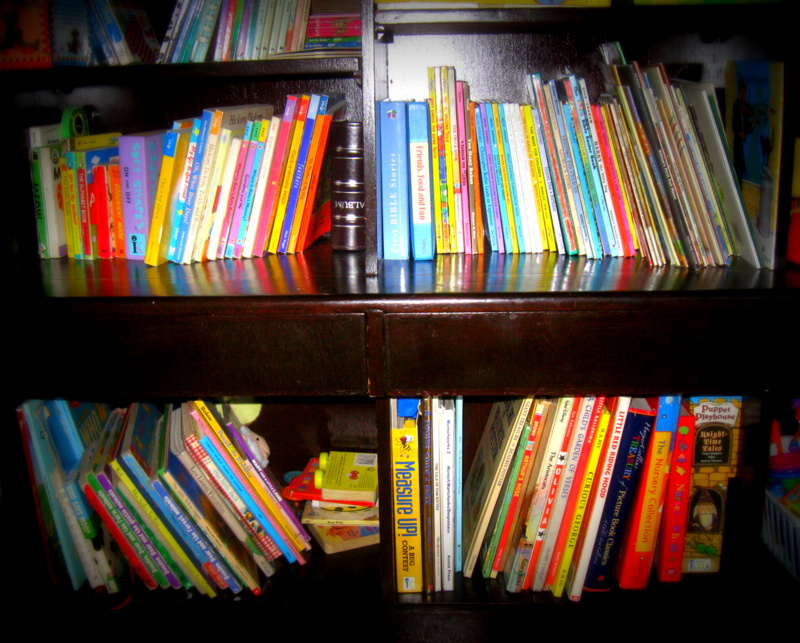
Our road to reading started with books. Lots and lots and lots of books. 

Our out-of-rotation books

Did I say lots?


Books that I selected for reading for the quarter

I collect (hoard) books, I can’t help it. I buy books all the time. Bookshops are like magnets that pull me to a much happier world.

Special books that I keep in my closet

And I accept donations from my sister who has less impulse buying control than I do. She passes on to me her older children’s books in boxes.

Books that I don't know where to put!


And I keep them all! (Manic laughter) And my husband knits his bushy eyebrows together and lets out an unhappy (angry) sigh. And I relent and pass on some of our books to my younger niece.

But should he wonder about this love affair? I still have the books that I had as a little girl, perfectly preserved on a shelf in my mother’s house, left there with a warning to never, ever let anybody touch those books!

Hey, you see? I get highly excited about books. So, let’s go back to what I really want to talk about today: my daughter’s road to reading… or how she seemingly taught herself to read at age three.


We Read From Birth

Being the book lover (hoarder) that I am, we started reading to Little T and Baby Boy when they were still in my tummy. As soon as I recovered from childbirth, I started reading and singing to them. It was more about them hearing the words than looking at the pictures or the words themselves.


We Taught The Basics

For a few crazy months when Little T was two, we taught her the alphabet in a really fun way. Basic phonics soon followed. Then a niggling thought occurred to me, one that made me uncomfortable. I thought, why would we teach a two-year old child how to read when she was still a baby? Her job is to play and to explore the world.


We Relaxed

So we stopped. Then we read about reading and decided not to stress about it. We learned that children will read when they are ready to read and that the strengthening of pre-reading skills, such as enjoying rhymes, is more important.

We did not set a timeline for when our daughter should be able to read. We were prepared to wait until she was ready. We were even willing to wait with the Fins, who start formal schooling at age seven. 


We Continued Reading and Reading and Reading

We just continued doing what we have been doing all along: read. 

We read before we get up from bed in the morning, we read when we nurse, we read in the bathroom (books about the potty!), we read before we take a nap in the afternoon, we read before we drift off to sleep at night. We read favorite books several times a day, sometimes in just one sitting, until our throats start to feel itchy.  We read.


Then She Started To Read!

Then Little T started reading by herself. She first read road signs, book titles, headlines. I thought she was just guessing, the magic of sight words. Then one night, she read two full sentences of instructions for one of our toys. She was ever so pleased!

From then on, there was no stopping her. She would pick up books and read aloud. She proved every time that she could read and that she could understand what she was reading.

I was blown away. After all, I did not teach her the mechanics of reading. I did not even know about the C-V-C (consonant-vowel-consonant, I researched) combinations that some people asked me about. 


We Provide Support

As Little T’s confidence in reading grows, she picks up longer books. She reads original chapters of Winnie-the-Pooh, though of course not in one sitting. She reads classic readers that are actually enjoyable: Else Minarik's Little Bear books, Russel Hoban's Frances books, and Arnold Lobel's Frog and Toad books.

When she encounters difficult words, she gets frustrated and I ask Mr. Google for help.

One time she kept saying "bar" instead of "br".  A Google search led me to teach her the beginning consonant blends. I made a game by picking out a card ("br", "cr", "dr", etc) and taking turns saying words that begin with the chosen sound. Two nights and we were done. "Br-" is now always "br", "cr-" is "cr" and not "car", and so on.


Reading Begets Reading

I am utterly convinced that being surrounded by wonderful books and being read to on a daily basis have provided our child a smooth road to reading. Reading begets reading. I couldn't have taught her even if I wanted to. 

I am not expecting that Baby Boy will also start reading by three. Every child is different. But we will continue reading to him lots and lots of books, lots and lots of times. There are three of us now who will take turns.

Reading begets reading.


Make magic!


Thursday, April 19, 2012

A Notebook and A Pen: Encouraging Story-Writing in Young Children


I’m not tired!!! is a phrase often heard in our home. It is said with a stomp of a foot and a frown on the beautiful face. Little T the four-year-old fights her sleepiness and happily skips her afternoon nap.

Comfortably parked in a corner, she entertains herself with her words and makes up scenes and conversations with her toys. Her doll Dora the Explorer, a character she has never watched on TV, is the usual heroine who goes off on great adventures and says the funniest things.

Listening from afar, I too am entertained, and charmed, and awed.


A Mind At Work

Partly based on real life and fantasy, Little T’s stories show a mind at work - a mind taking in and figuring out the world she’s in. I wish to encourage her creativity and I wish to show her that her ideas are valued, that her words can be put into paper like the many books that she so loves.

One day, I took out a notebook and a pen,  and started scribbling down her words. How empowering for a child to see her thoughts cherished.

Whenever Little T and I sit down and "write", I let the following rules guide my conduct as her secretary:
  • Write fast - You are the author's secretary and have to capture the words as they were articulated... or they wouldn't be the author's words at all.          
  • Ignore grammar - Let the ideas flow and don’t let grammar stop your child from spinning a good yarn. As in all things given a chance to develop, grammar will improve.
  • Don’t question the logic - Don't question the story, period. It's your child's story, let it be her story.
  • Attribute the work to the author and illustrator - Remember to credit the author/illustrator by writing “Written and Illustrated by." It will tickle your child's fancy. 
  • Read it back - Once finished, read it together and be entertained, charmed, and awed by your child.

Make magic!


Tuesday, June 28, 2011

Make Magic: Read a Story Again and Again... and Again!


Don’t you just love cuddling with your child, with her head on the crook of your arm while you read her a story? I do.

Until she says “again (please)!” And I read again… and again… and again… until my throat hurts so much that I beg her to let me rest.

Saving My Voice and Sanity
Today, I would like to share with you how I save my voice and sanity for a few moments every time Little T is determined to have a reading marathon: I play our collection of homemade audio books. We have quite a collection! Some are of just me reading, some are of me with Little T punctuating a sentence, and some are of Little T “reading” a book she has memorized. My favorite, though, is of Wonderful G reading and singing a favorite potty book.

Digital Keepsake
Our personal recordings are practical, fun, and are digital keepsakes to boot. With just a cell phone or an mp3 player, you too can easily make magic with audio books that you can just turn on when your little one is begging for “one more please.” Here are four quick steps:

  1. Go to the bathroom. Yup! The bathroom lends itself well as a recording studio.
  2. From your cell phone, choose a sound clip that you can use as cue to turn the page. Ding!
  3. Begin reading and exaggerate your voice. Remember to play your chosen sound cue whenever you turn the page.
  4. Cuddle and watch your child’s face as you listen to the recording together.

What story do you read all the time that you would like to make into an audio book?

Make Magic!
mariel

Tuesday, June 21, 2011

Make Magic: A Simple Way To Create A Book About Your Child

homemade books
A storyline. Pictures. Words. An album or a scrapbook. A book to treasure!

How can we help our children develop a positive view of themselves? A simple way is through photographs. According to  a teaching book I bought during a Scholastic Sale, Teaching Early Concepts with Photos of Kids by Geyer and Geyer, photographs can help children develop self-awareness as they "see themselves as a person with a past, present, and future" (page 6). Self-awareness can lead to high self-esteem. I would love to give that gift to my children.