Showing posts with label Philippine Children's Books. Show all posts

Wednesday, October 31, 2012

Praying and Remembering

When I was young, All Saints' Day and All Souls' Day were always solemn and special. My mother would prepare flowers and candles days in advance. Her preparations always signaled the upcoming holy days.

Every first of November, we would go to mass in the morning as a family and would then proceed to the cemetery to pray for my grandfather with all my cousins and aunts and uncles. We would always gossip, my cousins and I, and we would listen to our elders' stories about our grandfather. 

We would also gather as a family for his death anniversary, which also falls in November. So even though I've never met my grandfather, as he died almost two decades before I was born, I grew up knowing a lot about him. I grew up remembering him from the clan's collective memory.

My cousins and I have grown up and most of us have moved from the small town that we grew up in. Those family traditions, as I knew it, have come to an end. I want, though, to bring the same solemnity of All Saints' Day and All Souls' Day to my children's lives. I want us to respect, to remember, and to pray for the souls of our dearly departed. 


Remembering Our Loved Ones

My husband's grandmother passed away early this year. Our daughter was close to her and misses her until now. I want her and her brother to continue remembering her and praying for her, so I've asked my husband to tell us stories about her once in a while. I also share anecdotes about my own grandmother who passed away several years ago.

As it is my habit to get help from stories, I chose books to read to help us talk about those who were dear to our hearts. These bring tears to our eyes, and sometimes, Little T refuses to read them because she says she is reminded of her great-grandmother, "and that makes me cry!"


"Lola-Lola" is about a boy and his great-grandmother whom he calls "lola-lola." The pictures show how a very old person moves, and what she can and cannot do. Overall, a lovely story about our elders.


"The Mats" is a beautiful book about remembering those who have gone before us. It's also a wonderful book for learning about the Philippines. (Check out the unit study we created here.) 


We are going to Mass on November 1 or 2, light up candles, bring out pictures, and pray for our grandmothers and grandfathers. Though we have participated in Halloween parties and trick-or-treat activities in the past - mainly because we were parents excited to dress up our kids in cute costumes - we really do want to our observance of these holy days to be solemn and special. 

Our children are growing up, and as we have discovered, so are we.

Make magic!


Tuesday, August 28, 2012

Raising A Bilingual Child

I am a good Filipino speaker. But like most young parents today, my husband and I opted to speak to our children in English. I can't think now of why we decided to do that in the first place. I just know that I felt a bit queasy every time my daughter spoke and sounded like she lived in a country other than her own. To top it off,  I was also getting tired of translating for her when she could not understand what people were saying. In her own country.

The use of English as a Filipino child's first language is widespread. School children are flunking their Filipino subjects and many are now enrolled in tutorial services or remedial classes. Imagine not knowing your own language! Imagine not being able to think in your own language! 

The realization that we were putting our children's identity at risk made me and my husband decide to rectify our mistake. We made some rules that helped Little T become fluent in Filipino. Little Sir, on the other hand, issues some of his commands in the language. Yey!


Raising A Bilingual Child

The Learning Basket, together with The Learning Library, has a free parenting seminar called "How To Make Reading An Effective and Lasting Habit." First held on July 28, and blogged about by Teacher Mama Tina here, we staged a repeat just last Saturday, August 25. The recently-concluded event had an additional talk called "Raising A Bilingual Child" and generated a lot of questions from the parent-participants. 


Storytelling and activity for the kids during the event

I was pleased to hear our speaker, The Learning Library Manager Vanessa Bicomong, mention some of the strategies that my husband and I also use to ensure that our children grow up speaking Filipino like the natives that they are.

Surround Your Children With Speakers    Little T has a group of friends who speak Filipino really well. In addition, we also asked our household help to speak to the children only in Filipino.

Set A Place For Using The Language     My husband is adamant that we speak Filipino in public places. He felt like he was in the Twilight Zone one time that he was in the grocery and all he heard around him was English. 

Read Books     Since our "conversion," I've been on a hunt for good local children's books. To further our learning and enjoyment, I (together with my friend Sanne) also created unit studies or study guides on several titles. Check out my Downloads page or my previous blog post as I am offering those for free!


Watch Out For The Next Run Of The Event

Vanessa has many more practical tips and advice, not only about making your child a fluent Filipino speaker, but also on making reading a part of your lives. Sharon Marasigan, a parent-participant who I asked for feedback about the first seminar, said that it was "truly helpful, informative, and practical." 

We are already planning the next sessions, and I am hoping that you can join us for a few hours of learning for your children. Leave your email address below or join my mailing list if you want to be informed of the next venues (San Juan and Serendra) and schedule. 


Let us not make our children a stranger in their own country. Let us allow and help our children to speak their native tongue.


Make magic!


Wednesday, August 22, 2012

Enjoy and Learn from Philippine Picture Books - Free Downloads!

For the past two years, we have been using “Five in a Row” to homeschool our preschool-aged daughter. It is a literature-based program that uses some of the best children’s books out there, using story elements as a jumping point for all kinds of learning.

We’ve had countless hours of reading, talking, playing, and exploring. We love the wonderful memories we are creating as we learn together as a family.


Yearning To Learn About Our Country 

As much as I love “Five in a Row” though, I sometimes feel a strange sense of sadness each time we study about other places. And it turns out it’s not just me.

Recently, after weeks of reading stories set in places like China, France, and some regions of the United States, my daughter remarked, “Mama, when are we going to study about the Philippines? I want to study about the Philippines!”

When even a four year old expresses her yearning for her country, I know I have to listen and do something about it!


Growing Our Children’s Roots In Their Own Country 

Since I enjoy crafting our weekly “lesson plans” anyway, I thought I would create unit studies on different Filipino children’s books. I thought too of sharing what I would create with other parents who, like me, feel the need to grow their children’s roots more firmly in their own land.

I asked my friend and bookshop partner Sanne Unson to go on this adventure with me. So, between the hours we spend on our day jobs, caring for our families, and running our bookshop, we have managed to create several unit studies on different Filipino-authored children’s books.


Introducing, The Learning Basket’s Guide!

So, we are happy and eager to present “The Learning Basket’s Guide to Enjoying and Learning From Philippine Children’s Books.” We are offering you five unit studies this week, and plan to release one to two every month. It is our hope that more families will read more books written by Filipino authors.

What can you expect from a unit study? The main objective of each guide is to highlight Philippine culture, so you can expect suggestions to explore your neighborhood, to play traditional games, to study the local flora and fauna, and of course to speak the language.

How do you use the unit studies? Well, just have fun! In the tradition of “Before Five in a Row”, we encourage you to choose a topic per reading and take off from there. If you wish, you can print out and do the related games and activities at the end of each document. You don’t have to discuss everything in the guides in one sitting. Just let yourselves be inspired to learn and know more about our country every time you read a book.


The Links 

Here are the links to the first five of the unit studies we have created. These will also be listed on the “Downloads” page of this blog for easier reference.

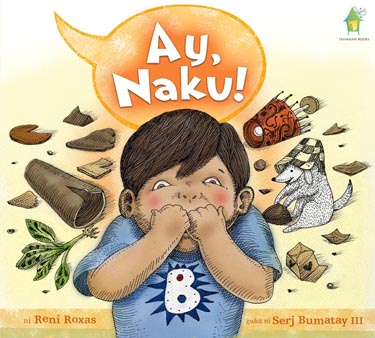
Ay Naku! - Ay Naku! tells the story of a day in the life of Botbot – in 65 Filipino words. It is a funny and endearing read-aloud that is perfect for learning our language, country, and culture. Winner of the Best Children's Book in the 2nd National Book Awards 2012. If you order the book from Shop @ The Learning Basket this August, you will get a free print-out of the unit study!

Si Putot  - "Si Putot" is about a dog who is ashamed of his very short tail. When he gets to talk to a worm though, he realizes that he has nothing to be embarrassed about, and that a tail, no matter its length, is still a tail.

Isang Mayang Uhaw - Five birds, one glass of water. This old fable, as retold by Victoria Anonuevo and illustrated by Virgilio Almario in "Isang Mayang Uhaw" published by Adarna House, is about a clever sparrow that came up with a solution to his problem. How can a small sparrow quench his thirst after four bigger birds get their fill and leave him with a nearly empty glass?

Araw Sa Palengke - Araw sa Palengke is a story about a little girl's trip to the wet-market with her mother. She describes what she sees, hears and does in her adventure.

Ang Pambihirang Sombrero - Ang Pambihirang Sombrero is about a girl named Mia and her magical hat that can hold many things on top. Its illustrations are both silly and magical with lots of details to think and talk about.


What Are Your Favorite Philippine Children’s Books? 

We have selected some of our children’s favorites and are still combing the local bookstores for more. With the countless books out in the market, though, how do we know which ones are great? We are hoping that you can tell us so we can include your favorites in our bucket list.

Please write your favorites and requests for unit studies in the comments. If you like our unit studies/guides, please help us spread the word and share this blog post with your friends. Let us help each other in helping our children enjoy and learn from Philippine children’s literature!


For Updates 

On another note, if you want to receive updates from me – new unit studies, events, special bookshop offers – you may subscribe to our newsletter. I promise not to flood your inbox with junk mail! 


Make magic!


Tuesday, July 17, 2012

Celebrate National Children’s Book Day with Tahanan Books – A Giveaway


Today is the 29th National Children’s Book Day and I thought I would celebrate with a giveaway sponsored by my favorite local publisher – Tahanan Books!


The first book we ever read by Tahanan was Jose Rizal’s “The Monkey and the Turtle,” the exact same book being commemorated by the National Children’s Book Day every third Tuesday of July, the reason for being of this annual celebration! I just found out about it (like right now!) when I googled about the celebration. Isn’t it amazing?


We then received as a gift the funny and endearing “Ay Naku!” written by Tahanan big boss Reni Roxas. Told in only 65 Filipino words, this book had my daughter exclaiming "ay naku!" over every little thing for several days. This is a must-have for those who want their young children to start appreciating the Filipino language.


Friday, June 1, 2012

Philippine Independence Day for Preschoolers


June 12 is right around the corner. We plan to learn about Philippine Independence Day in our usual way - fun, gentle, and literature-based.

I went to National Bookstore without a specific title in mind and was just hoping for the best. I looked through the books published by Tahanan Books knowing beforehand that its books are mostly well-written and beautifully illustrated.

When I could not find books written in Filipino, I “settled” for Bandila: The Story of the Philippine Flag by Merci Melchor because it’s such an obvious choice for the holiday. It tells the story of the Philippine revolution in simple words and shows the evolution of our flag in pictures. However, it is still too much of a textbook for my taste and my child’s age, with its names and dates, and I kept on looking.


Another title that I bought was The Chair King by Karen Flores and Mark Justiniani. It seemed like fun and I really just wanted to buy a Filipino book, albeit written in English, right at that moment. Talk about emotional intelligence!

The Chair King  is the story of Esteban Dospordos, a giant who loves chairs but can’t find any that’s big enough for him. He goes into a wild rampage, ruining chairs everywhere, determined that no one else can enjoy a chair if he can’t! The story ends with great festivity when the townspeople’s plan to defeat the giant works. It was on my third reading of the story that it hit me that I had accidentally picked the PERFECT book to introduce young children to our country’s Independence Day!


With the two books, I was able to create a short unit study that we will do in the first two weeks of June, just in time to celebrate Philippine Independence Day. I am sharing it with you as a PDF download. Using the two books, you can talk to your child about:
  • Perspective
  • Feelings
  • Music
  • Filipino attire
  • Philippine towns
  • Philippine history
  • Filipino words
  • Flags
  • Philippine map
  • The Philippine National Anthem

Both books are available at National Bookstore. (This is not a paid advertisement!) The Chair King is priced at P320 and Bandila at P175. I hope you can check these out  for you and your child to enjoy together while learning about our country. For those who are U.S.-based, Tahanan Books are available for order online.

Download the Philippine Independence Day for Preschoolers PDF file so you can see the learning fun that you can have! 

Philippine Independence Day Unit Study for Preschoolers


I would love to hear your thoughts about this, so please leave me a comment!

Make magic!

Thursday, July 28, 2011

Isang Mayang Uhaw: Experiencing Birds


Five birds, one glass of water. This old fable, as retold by Victoria Anonuevo and illustrated by Virgilio Almario in Isang Mayang Uhaw published by Adarna House, is about a clever sparrow who came up with a solution to his problem. How can a small sparrow quench his thirst after four bigger birds get their fill and leave him with a nearly empty glass?


A GLASS OF WATER The clever sparrow dropped some pebbles into the glass to make the water rise. For several meals, I would pour a little bit of water into Little T’s glass and give her a bowl of ice cubes. She would gingerly plop ice cubes one at a time and laugh in delight as the water rose. I was careful to just let her enjoy the moment and not ruin it by being scientific with “this is called displacement.” J She also tried out the new words she picked up, saying “it’s up to the brim” (from the English translation) and asking for water for the “Uhaw na Little T.”


FILIPINO Like Ang Pambihirang Sombrero by Jose Miguel Tejido, Isang Mayang Uhaw is part of our conscious effort to make Little T truly bilingual. With this book, we practiced isa, dalawa, tatlo, apat, at lima as we counted the birds and the pebbles in the story. Little T got interested enough to learn how to count up to dalawampu!

BIRD WATCHING Little T and I spent precious quiet moments appreciating, watching, and listening to the birds flying around the garden. Being with nature is something that I want to have more in our daily life, and we are blessed to only have to open the backyard door to do it. We attracted some birds with a bird-feeder we made from a discarded book box, but the airborne creatures are just too quick for my camera.


POETRY AND PAINTING We also spent one morning painting outside. We followed a tutorial on Wet on Wet Painting that is popular with Waldorf families. I told Little T that we were going to paint about birds and gave her some key words to guide her: sky, fly, swoop, rest, dance, and hop. The objective was not to draw birds, but to feel how it is like to be a bird. I then recited a poem we learned from Baby Boy’s Kindermusik class, Feathers:

fancy colors
fluffy, downy, tickly
floating, dancing, twirling
free, falling
falling
still


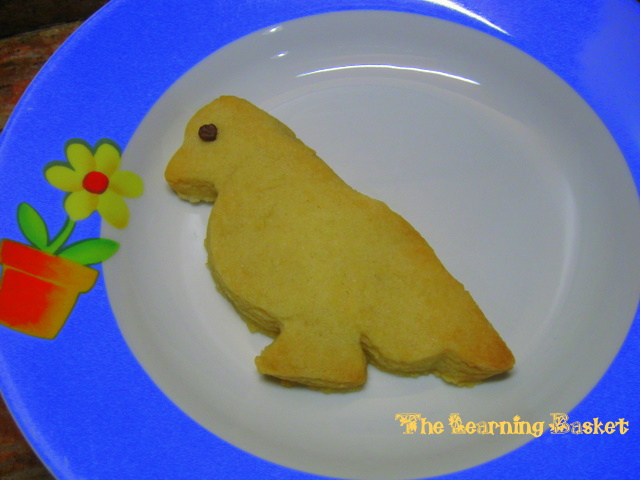
COOKIES I try to incorporate some time in the kitchen every week, and would love to have Wednesdays as our regular cooking or baking day. For Isang Mayang Uhaw, we whipped up some Easy Sugar Cookies from All Recipes and used bird-shaped cookie cutters. This activity, as usual, worked on several levels:
    • Visual perception as we determined what kind of birds the cookie cutters were
    • Life skills as we baked and washed cookie cutters and cookie sheets
    • A bit of math as we measured, spooned and leveled ingredients
    • Physical skills as we mixed the ingredients and pressed the cookie cutters into the dough
    • Fine motor skill as we put mini chocolate chips for the birds’ eyes


When we didn't have butter the first time we planned to bake, Wonderful G got two slices of bread, had Little T cut it with the cookie cutter, popped it in the oven, and voila! Bird toasts!


MUSIC AND CREATIVE MOVEMENT Ah! Music soared in our little corner of the world as we danced to Vivaldi’s Four Seasons, a suggestion I found at Kindermusik’s See What I Saw Family Activity Book. Baby Boy giggled as we danced to the enchanting Bird’s Chorus (listen here) found in his Kindermusik CD.

Unlike children being herded to school stages to perform, Little T makes the world her stage. It was a joy to watch her flit around the garden while singing Once I Saw A Little Bird over and over. (And over.)

And far away she flew!
I was excited, too, to teach her Ang Pipit, a Filipino song from my childhood about a small sparrow’s life.

May pumukol sa pipit sa sanga ng isang kahoy
At nahagip ng bato ang pakpak ng munting ibon
Dahil sa sakit, di na nakaya pang lumipad
At ang nangyari ay nahulog
Ngunit parang taong bumigkas,
"Mamang kay lupit, ang puso mo'y di na nahabag,
Pag pumanaw ang buhay ko
May isang pipit na iiyak!"

I still have a lot of ideas and I would love to go to the zoo to visit the hawk, hornbill, egret, and rail featured in the book.  There’s no hurry though. We can always pick it up again for another round of natural learning. For now, I am perfectly satisfied that my child is learning just by watching birds at the backyard, baking, painting, and dancing like a bird.

Make magic!
mariel


Wednesday, May 18, 2011

Ang Pambihirang Sombrero: Neighborhood, Hats, and Art


I have almost given up on finding a Filipino children’s book appropriate for a three-year old when I found Ang Pambihirang Sombrero (The Strange-Looking Hat) by Jose Miguel Tejido at National Bookstore. With fantastic illustration, this story of a hat that can hold so many things on top is just silly and magical. In a week’s time, our copy is dog-eared and wrinkled – signs of a well-loved book.

I put it in our Learning Basket when we were doing Caps for Sale, excited to introduce to Little T a Filipino book that is just as wonderful as the classic English-language books we’ve been reading. Here’s how we tackled this new favorite:

HATS Little T wore her sombrero in different, silly ways just like Mia, the main character. Since this book is about a hat, it is a natural go-along for our cap activities in Caps for Sale.


VOCABULARY Wonderful G and I are uncomfortable that Little T speaks English better than she does Filipino. We did not plan on raising her that way, but I suppose cooing and talking to a baby in English just seemed easier. Ang Pambihirang Sombrero perfectly complements our hopefully-not-late-effort to make our daughter fluent in both English and Filipino. Its story provides a wealth of Filipino words that Little T is now brandishing about: sombrero, hawla, saranggola, tindahan, panederya, pulis, bumbero, etc etc.

ART I am impressed by the art consciousness that Before Five in a Row has raised in Little T… and me. She asked me why only Mia is colorful in the picture below and the rest of the children are just blue. I scrambled for an answer and I think I gave her a valid one: that the artist wants the readers to focus on Mia, her hat, and all the things on top of it.


Little T and I love the pictures very much. We keep finding something delightful in every reading such as Mia’s dog doing something silly on every page. On one page, it is blowing bubble gum, and on the picture above, it seems to be an orchestra conductor.  

SOCIAL STUDIES Mia goes around her neighborhood to ask everyone if they think her hat beautiful. She went to a sari-sari store (small neighborhood store), bakery, doctor’s clinic and saw a policeman, a fireman, and a gardener along the way. Guess what we did? We went on a field trip! We have not had the inclination to go to such neighborhood fixtures until now because everything is just inside a mall or super center these days, even doctors' clinics!

Little T now points out all the sari-sari stores that she sees

Buying spanish bread from the panederya

Mamang Pulis gamely posed for us, joking that 
he would see himself on Facebook!

Exploring the world and learning this way with Little T is definitely fun and rewarding. With her insightful questions and comments, I feel affirmed of our decision to keep her at home for her preschool years with her first and best teacher.

Make magic!
mariel